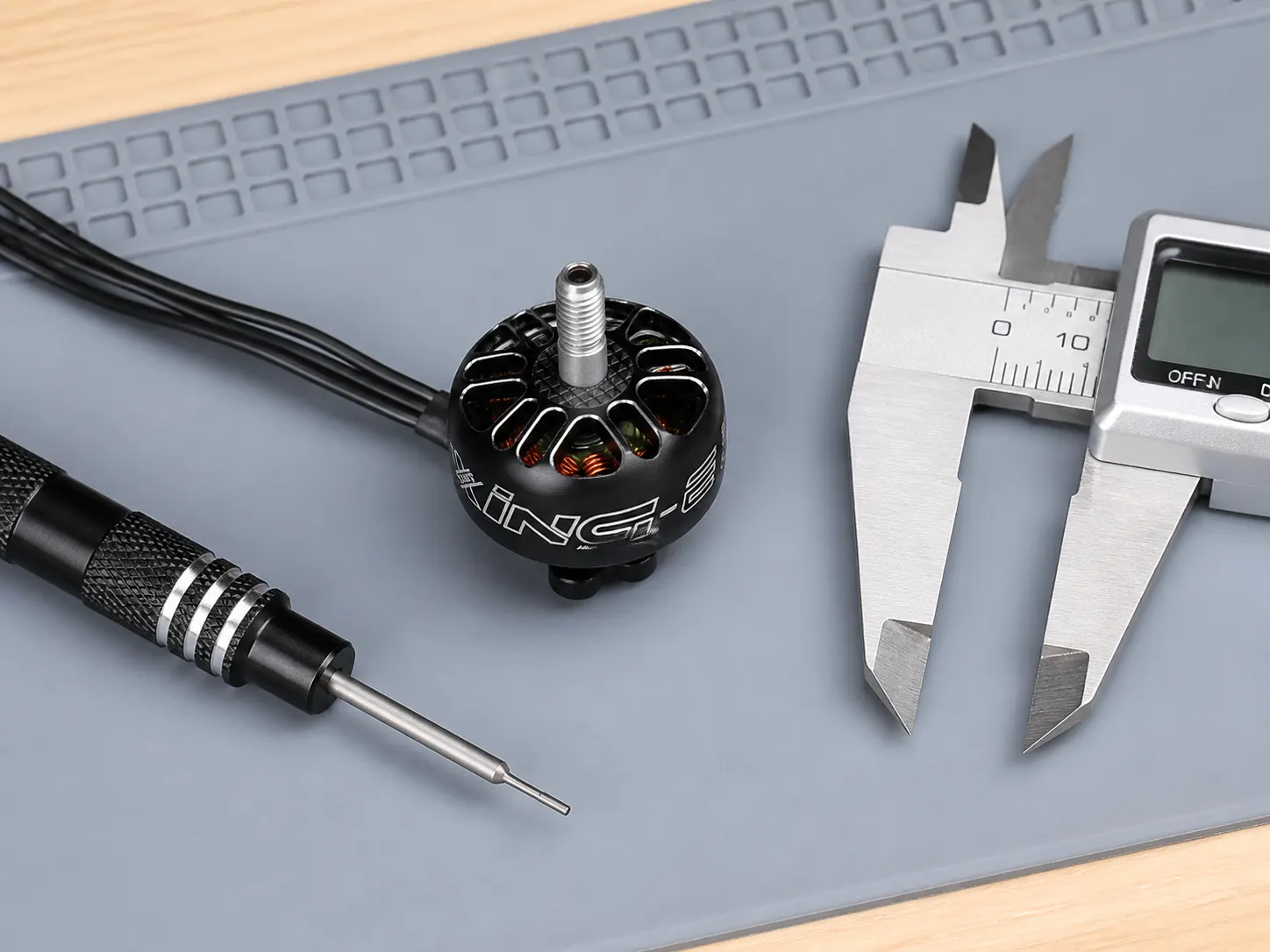
Short answer: The right XING-E Pro 2207 1800KV replacement motor is the one that matches the aircraft's existing motor set and documented build, not simply the closest product name. The current listing identifies the selected part as an iFlight XING-E Pro 2207 motor in an 1800KV 6S configuration. iFlight's family page adds a 16x16 mm mounting-hole pattern, 5 mm shaft and M3 shaft screw. Use those facts to narrow the check, while treating frame fit, ESC pairing, propeller choice, thrust and complete package contents as manufacturer does not specify for your particular quad.
Read 2207 and 1800KV separately
The product name contains several decision fields. XING-E Pro identifies the family, 2207 identifies the listed motor size, and 1800KV identifies the selected rating. The page places that selected motor in a 6S configuration. Keep those fields separate when comparing a damaged part with a saved build sheet.
A 2207 motor with another KV is not automatically a replacement for an 1800KV motor. A motor from another family also needs its own documentation, even when size and KV look similar.
| Specification | Documented value | Why it matters |
|---|---|---|
| Family | iFlight XING-E Pro | Separates this motor from similar families |
| Size | 2207 | Compare with the existing motor and frame plan |
| Selected KV | 1800KV | Avoid the separately shown 2450KV and 2750KV options |
| Battery context | 6S | Compare with the original aircraft build |
Measure before assuming a fit
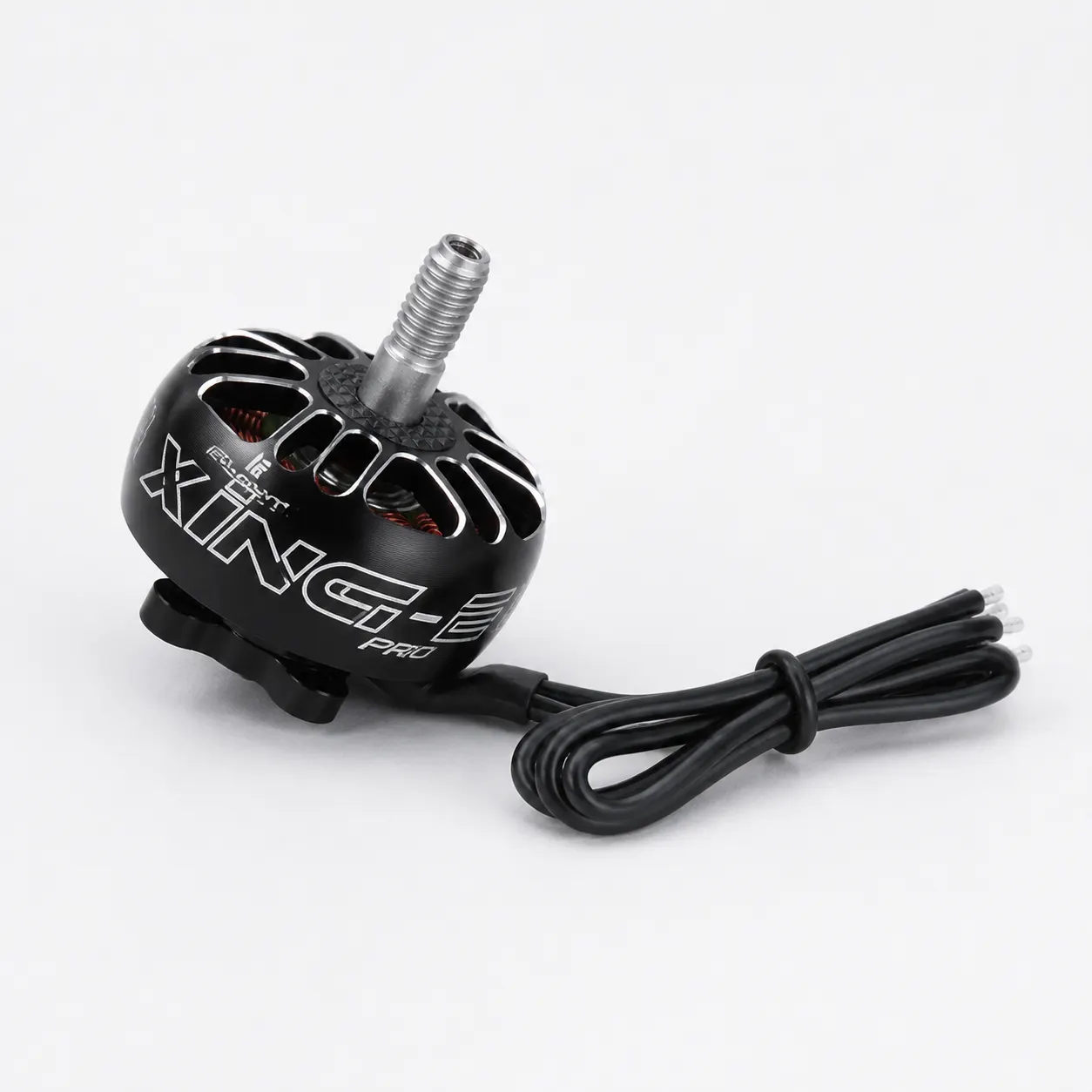
iFlight's XING-E Pro 2207 page lists a 16x16 mm mounting-hole pattern, a 5 mm steel hollow shaft and an M3 shaft screw. Put the frame drawing, existing motor and product documentation side by side before deciding that the replacement is mechanically suitable.
The seller page does not document the screw length for your frame, wire length, motor-height clearance or every included item. Measure or confirm those details from the frame and motor instructions instead of inferring them from the 2207 label.
- Identify the damaged motor and photograph readable markings.
- Confirm XING-E Pro, 2207, 1800KV and 6S against the build record.
- Compare the frame mounting pattern with the documented 16x16 mm detail.
- Check screw length, clearance, wire route and propeller space.
- Resolve any unanswered dimension or package question before ordering.
Keep performance claims inside the evidence
A family page can describe construction features without predicting the thrust, noise, efficiency or flight time of a particular quad. Those outcomes depend on the wider build and are not documented for this seller listing.
For a replacement, consistency with the remaining motors is usually the central question. For a new build, use the complete parts list and the relevant component instructions instead of treating this article as a tune or propulsion recipe.
Limits before purchase
Manufacturer does not specify a universal frame list, ESC pairing, propeller pairing, complete kit contents, wire length or flight performance on the available product page. The iFlight source supports family hardware details only.
Do not assume that the 1800KV 6S option is interchangeable with the separately shown 2450KV or 2750KV options. Confirm the selector state, damaged motor identity and surrounding build documents before payment.
Related guides and product details
Use the 2207, 1800KV, 6S and mounting details as a structured check, then verify each build-specific unknown with the relevant manufacturer documentation. Read iFlight XING-E Pro 2207 1800KV 6S UK Buying Guide for related guidance. Read Nazgul5 2207 1800KV Motor Replacement Checks for related guidance. Review the documented specification on the iFlight XING-E Pro 2207 1800KV 6S FPV Brushless Motor product page before ordering.
Sources and safety context
- Supports the seller-listed product identity, selected option and variant wording. Current Brushhollo product page.
- Supports the documented 16x16 mm mounting pattern and family hardware details. XING-E Pro 2207 2-6S FPV Motor.